

 See My Latest Article on HelloNation
![Homeowner checks a thermostat while a central air conditioner runs beside a dusty filter. KEYWORDS: ["central air conditioner troubleshooting", "frozen AC coil", "homeowner checking HVAC filter"]](https://hvacexpertinmorrisil.org/wp-content/uploads/sites/8960/2026/09/morris-il-guide-to-an-air-conditioner-that-stops-cooling-1024x768.jpg)
An air conditioner that runs without making the room comfortable usually has a simple cause, such as a dirty filter, blocked airflow, thermostat setting, or outdoor unit problem. Some issues are safe to check at home, while electrical, refrigerant, and mechanical problems require trained service because they can create safety risks or cause further damage.
What should be checked first when the AC is not cooling?
Start with the thermostat, airflow, and electrical power. These basic checks can identify several common problems without removing panels or handling wiring.
Set the thermostat to Cool, lower the temperature several degrees below the current indoor temperature, and confirm that the fan setting is on Auto rather than On. A fan set to “On” may continue blowing air after the cooling cycle ends, which can make the air feel less cool even when the system is operating normally.
Next, check whether air is coming from the supply registers. Weak airflow throughout the home points to a possible filter, blower, ductwork, or frozen-coil problem. If airflow is normal but the air is warm, the issue may be outside at the condenser or within the refrigeration system.
Also check the electrical panel for a tripped breaker. A breaker that trips repeatedly should not be reset over and over. Repeated trips may indicate an electrical fault or a problem with the air conditioner’s compressor.
Could a dirty air filter cause warm air?
Yes. A clogged filter restricts the amount of air moving through the indoor coil. The coil may become too cold and collect ice, reducing cooling and eventually blocking airflow.
Filters often need more frequent attention during heavy-use periods, especially in homes with pets, children, renovation dust, or open windows during high-pollen weather. Area households may also notice more dust accumulation after spring storms or during dry summer periods.
If the filter is visibly gray, packed with dust, or difficult to see through, replace it with the correct size and type. Do not operate the system for long without a filter, because unfiltered dust can collect on the blower and indoor coil.
A new filter may not restore cooling immediately if ice has already formed. Turn the system off and allow the ice to melt fully. Running the fan alone can help circulate air, but do not scrape ice from the coil or use a heat source to speed melting.
Why is the outdoor AC unit running but the house is still warm?
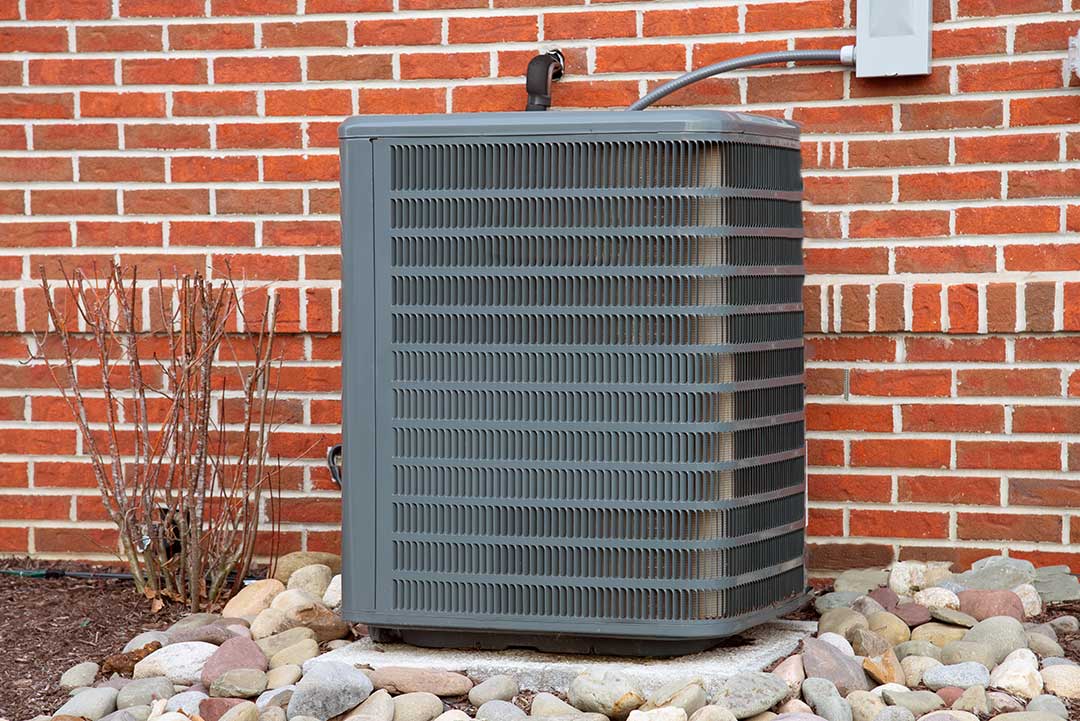
An outdoor fan turning does not prove that the entire system is cooling. The compressor may not be operating, or the system may have restricted airflow, low refrigerant, or a failing electrical component.
With power safely on, look at the outdoor unit from a distance:
- Is the fan turning?
- Is the unit making unusual buzzing, clicking, or grinding sounds?
- Is warm air leaving the top?
- Is the cabinet surrounded by grass, leaves, or other debris?
- Is there water or ice around the refrigerant lines?
Keep at least the immediate area around the condenser clear of vegetation, plastic, stored items, and loose debris. Do not remove electrical panels or reach inside the unit. The outdoor condenser contains high-voltage components, and its capacitor can retain a dangerous charge even after power is disconnected.
A unit that hums but does not start, repeatedly shuts off, or produces burning odors should be turned off at the thermostat and electrical disconnect until the cause is identified safely.
What does ice on the indoor or outdoor refrigerant line mean?
Ice usually indicates that the system is not absorbing or moving heat properly. Common causes include a dirty filter, blocked return air, a weak blower, low refrigerant, or a restriction in the system.
Ice may form on the larger insulated copper line near the outdoor unit, the indoor coil, or both. The system should be turned off rather than operated with ice present. Continued operation can stress the compressor and may increase the cost of repairs.
After the ice melts, check the filter and make sure supply registers and return grilles are open and unobstructed. If the system freezes again, the underlying problem has not been corrected. Refrigerant should not be added based only on symptoms; a qualified technician must locate and address a leak or other cause.
Can closed vents or blocked returns make an AC seem broken?
Yes. Closing several supply vents does not force more cooling into the remaining rooms. Instead, it can raise duct pressure and reduce total airflow. Furniture, rugs, curtains, or stored items covering return grilles can create a similar problem.
Walk through the home and confirm that:
- Supply registers are open.
- Return grilles are not blocked.
- Interior doors are not preventing air from returning to the central system.
- Vents are not covered by furniture or floor coverings.
- Flexible ducts in accessible areas have not been crushed or disconnected.
In older homes or homes with additions, uneven temperatures may also reflect duct layout, insulation levels, sun exposure, or air leakage rather than a failed air conditioner.
Why does the AC work briefly and then stop?
Short cycles can result from an oversized system, a dirty filter, frozen coil, thermostat problem, overheating outdoor equipment, or a safety control shutting the unit down. Frequent starts and stops can prevent the system from removing enough humidity, leaving rooms feeling clammy even when the temperature falls slightly.
During hot, humid stretches, the system may run for long periods. That is not automatically a problem if indoor temperatures remain comfortable and the air conditioner is steadily removing heat. A concern arises when the unit starts and stops every few minutes, fails to reach the thermostat setting, or produces unusual sounds.
Check the filter, thermostat placement, and outdoor airflow first. Avoid placing lamps, televisions, or other heat-producing devices directly beneath the thermostat, since they can affect its temperature reading.
When is an AC problem an emergency?
Turn the system off and treat the situation as urgent if there is smoke, a burning smell, exposed wiring, arcing, repeated breaker trips, or water near electrical equipment. Do not touch damaged wiring or wet electrical components.
Water beneath the indoor unit is not always an emergency, but it should not be ignored. A clogged condensate drain, frozen coil, blocked drain pan, or damaged pump can allow water to reach ceilings, walls, flooring, or electrical parts. Shut off cooling if water is actively spreading and protect nearby belongings.
If anyone in the home experiences serious heat illness symptoms—such as confusion, fainting, severe weakness, or a very high body temperature—move the person to a cooler place and seek emergency medical help. Air conditioning problems become more urgent for older adults, infants, and people with certain medical conditions during prolonged heat.
What information helps diagnose the problem?
Before arranging service for a hazardous or unresolved issue, record useful observations:
- Whether the indoor blower runs
- Whether the outdoor fan runs
- Thermostat setting and indoor temperature
- Strength of airflow at the registers
- Presence of ice, water, or unusual odors
- Sounds made during startup
- Whether the breaker trips
- Recent filter replacement
- Whether the problem affects the entire home or only certain rooms
This information helps distinguish an airflow problem from a power, thermostat, drainage, or refrigeration issue. Avoid guessing at refrigerant levels, bypassing safety controls, or opening sealed electrical compartments. Those steps can create injury risks and may damage the equipment.
How can cooling problems be reduced during Morris summers?
Regular filter checks, clear outdoor space, and unobstructed return air can prevent many avoidable performance problems. Before the hottest part of summer, inspect the area around the condenser, confirm that the condensate drain is not visibly clogged, and make sure the thermostat is functioning properly.
Use blinds or curtains on sunny windows during the afternoon, limit heat-producing appliances during the hottest hours, and keep exterior doors closed as much as practical. These measures do not repair a malfunction, but they reduce the heat load placed on the system and can improve comfort while a problem is being evaluated.
IMAGE_ALT:
Homeowner checks a thermostat while a central air conditioner runs beside a dusty filter.