

 See My Latest Article on HelloNation

Indoor air quality depends on more than visible dust. Heating and cooling equipment, moisture levels, ventilation, household activities, and the condition of the duct system all play a role. Duct cleaning can help in certain situations, but it is not a universal solution for every indoor air concern.
For households in Morris, IL, seasonal heating, summer air conditioning, closed windows, and tracked-in soil can all affect how much airborne material circulates indoors. Understanding what duct cleaning can and cannot do helps residents make practical decisions.
Can duct cleaning improve indoor air quality?
Duct cleaning may improve indoor air quality when the ductwork contains substantial dust, construction debris, pest material, or visible mold growth. Removing those contaminants can reduce the amount of material available to enter living spaces through supply registers.
The effect is usually limited when ducts are only lightly dusty. Household dust often comes from floors, furniture, fabrics, pets, cooking, and outdoor air rather than from the duct system itself. Cleaning ducts will not remove those sources.
A properly maintained system may deliver cleaner air after cleaning, but the improvement depends on:
- What is inside the ducts
- Whether contaminants are being disturbed and circulated
- How well the air handler and blower compartment are cleaned
- Whether the return side of the system is leaking
- How effectively filters are installed and maintained
- Whether moisture problems are present
Duct cleaning should be viewed as one possible part of an indoor air quality plan, not a substitute for source control, filtration, or moisture management.
What kinds of contaminants can collect inside ductwork?
Ducts may collect ordinary household dust, drywall particles from remodeling, insulation fibers, pet hair, pollen, and soil tracked indoors. Return ducts generally collect more material than supply ducts because they draw air from the home.
Other concerns deserve closer attention. Evidence of rodents or insects, accumulated water damage, and visible biological growth may indicate a condition that needs to be addressed at its source. Cleaning away debris without correcting leaks, pests, or moisture can allow the problem to return.
The blower compartment, evaporator coil area, drain pan, and return plenum can also affect air quality. If these components are dirty, cleaning only the accessible sections of ductwork may provide little benefit.
Does dusty ductwork always mean the air is unhealthy?
No. A small amount of settled dust inside ductwork is common and does not automatically indicate a health hazard. Dust settles because air movement slows inside parts of the system, especially when the equipment is not operating.
The more useful question is whether the material is being released into occupied rooms or indicates another problem. For example, loose debris near a supply register, damaged duct lining, or a wet section of ductwork is more concerning than a thin layer of dry dust that remains undisturbed.
People with asthma, allergies, or sensitivity to dust may notice symptoms from many indoor sources. If symptoms occur mainly in one room or after the heating or cooling system starts, checking filters, registers, moisture, and duct connections may help identify patterns. Indoor air symptoms can have many causes, so duct cleaning should not be treated as a diagnosis or cure.
When is duct cleaning more likely to be worthwhile?
Duct cleaning deserves consideration when there is a clear reason to believe the system is distributing contaminants. Examples include:
- Visible dust or debris blowing from supply registers
- Significant construction or remodeling dust inside the system
- Rodent or insect activity within ductwork
- Standing water or repeated condensation
- Strong musty odors connected to the system
- Visible mold-like growth on hard system surfaces
- Heavy buildup that restricts airflow
- A system that has been open during major renovation work
A home that has experienced water damage, pest intrusion, or extensive remodeling may need more than routine cleaning. The source of contamination should be corrected, and damaged porous materials may need appropriate replacement rather than simple vacuuming.
Can duct cleaning remove mold?
Duct cleaning can remove some contamination from hard, accessible surfaces, but it does not solve the conditions that allow mold to grow. Moisture control is the central issue.
Mold-like growth in or near an air distribution system may result from condensation, a clogged drain, a wet insulation layer, a roof or plumbing leak, or excessive indoor humidity. If the moisture remains, growth can return after cleaning.
Flexible ductwork and insulated duct liners require particular care because aggressive cleaning can damage the material. Porous sections that are saturated or deteriorated may not be suitable for repeated cleaning. A suspected moisture or biological contamination problem should be evaluated carefully, especially if occupants have respiratory sensitivities.
What has a larger effect on indoor air quality than duct cleaning?
Several routine measures often affect indoor air more consistently than cleaning ducts.
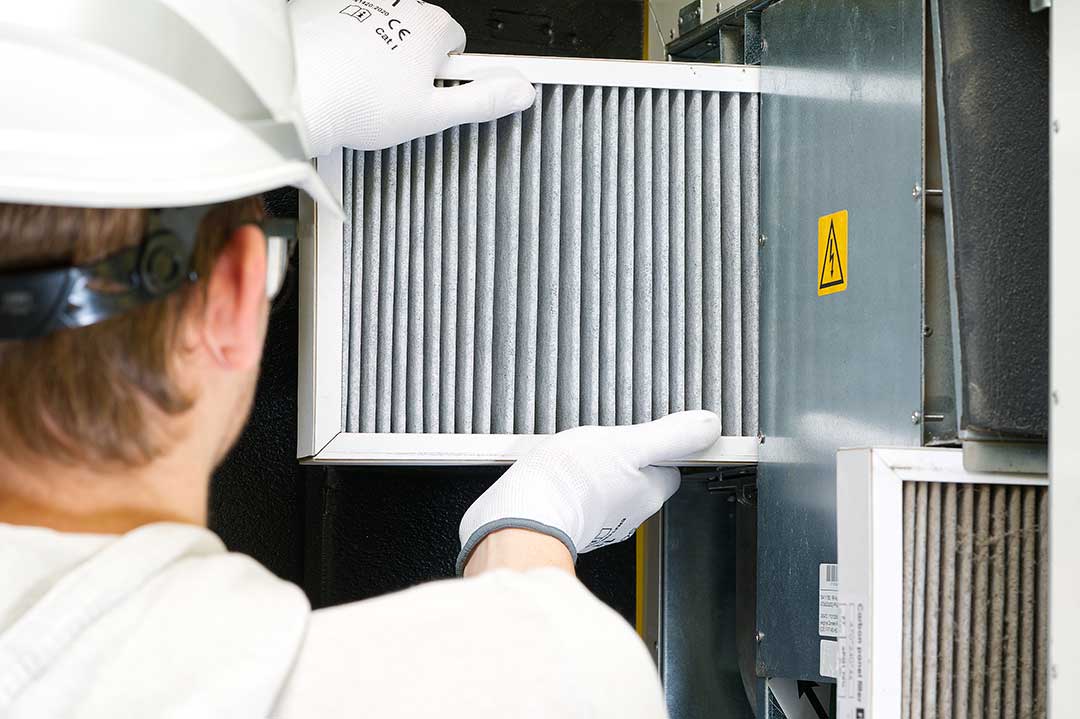
Use the correct filter. A filter should fit securely and be replaced according to its condition and the equipment manufacturer’s guidance. A filter that is too restrictive for the system can reduce airflow, increase operating strain, and create comfort problems.
Control moisture. Humidity supports mold and dust mites, while very dry winter air can irritate skin and airways. Air leaks, wet crawl spaces, plumbing problems, and condensation around equipment should be addressed.
Keep return grilles clear. Furniture, rugs, curtains, or stored items blocking return air can reduce circulation and cause the system to draw air from unintended gaps.
Reduce indoor particle sources. Cooking without adequate exhaust, burning candles, smoking, dusty hobbies, and frequent use of harsh sprays can contribute more airborne particles than clean, intact ducts.
Maintain the equipment. Dirty coils, drain pans, blower compartments, and evaporator sections can affect airflow and odors. The entire air-handling system matters, not just the visible registers.
How do local seasonal conditions affect ductwork?
In Morris, winter heating can keep homes closed for long periods, increasing reliance on the forced-air system. During summer, air conditioning may create condensation around coils and drain components if airflow, drainage, or insulation is inadequate.
Spring and fall can also bring pollen, tracked-in soil, and changing humidity. Homes near active construction, unpaved surfaces, agricultural areas, or heavily used roads may experience more outdoor dust entering through doors, windows, and air leaks. That material does not necessarily mean the duct system itself is contaminated.
Older houses and homes that have undergone additions or remodeling may have mismatched duct sections, disconnected joints, or unsealed returns. These conditions can pull dusty air from wall cavities, attics, basements, or crawl spaces. In such cases, sealing leaks may improve air quality and system performance more effectively than cleaning alone.
What should residents check before deciding on duct cleaning?
Start with a visual inspection of accessible areas. Look at return grilles, supply registers, the filter slot, and the equipment cabinet. Note visible debris, water staining, pest evidence, damaged insulation, or unusual odors.
Ask whether the concern is confirmed or assumed. “Dusty house” is a broad description, while “construction debris visible inside the return plenum” identifies a specific condition. Also consider whether the system has been operating normally and whether filters have been installed correctly.
Cleaning is more likely to be useful when there is documented contamination, a recent renovation, pest activity, or a moisture-related problem. If none of those conditions exist, attention may be better directed toward filtration, cleaning household surfaces, controlling humidity, and checking for air leaks.
Duct cleaning can contribute to better indoor air quality when it addresses a real contamination source. Its value is greatest when combined with clean equipment, controlled moisture, sound duct connections, and practical household habits that reduce airborne particles.